Showing posts with label Didactic. Show all posts
Stick a Fork in Me
Posted by Amy in Baptist NAP, Didactic, SRNA Life on July 19, 2011
I'm done! I passed my comprehensive final and have in my possession an evaluation form, signed by the Program Director, stating that I've completed the requirements of the Baptist Nurse Anesthesia Program and will be eligible to sit for the certification exam following our graduation on August 14th. That means no more lectures or tests ever again! Clearly, Adam is more sad about this fact that am I, as evidenced by the way he gazed longingly at his desk through the window of our classroom before leaving the program office.

Next up on my to-do list:
- Find a job*
- Find a place to live
- Graduate
- Move
- Study for and pass the board exam
- Finish Season 3 of Sons of Anarchy with my girl, Annie*
- Plan a wedding
- Write my final Student Representative article and speech for the AANA Annual Meeting
* My priorities

Capstone Projects
Posted by Amy in Baptist NAP, Didactic on April 29, 2011
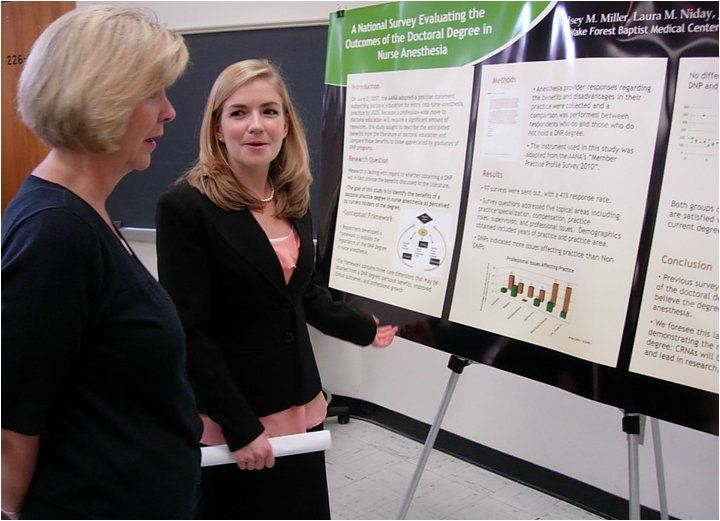
I need a tee shirt that reads "I went to anesthesia school and all I got was this lousy capstone poster."
 Team Voltron (don't ask) presenting our poster on Perioperative Pediatric Albumin Administration




Peace out, classroom!
Posted by Amy in Baptist NAP, Didactic, SRNA Life on April 28, 2011
Oh Anesthesia Classroom. We've had some good times, you and I. We've laughed. We've cried. We've made memories. Like the time Dr. Rieker unintentionally drew an inappropriate figure on the overhead in his attempt to explain dermatomes. Or when, during a break from lecture, Dave tightened the cap on Courtney's soda so that she couldn't open it or consume it's caffeinated contents, thereby slowing her rate of speech and allowing us students to keep up with her teaching points.
But it hasn't been all fun and games. You taught me that earning a "B" isn't the end of the world. You taught me not to pay attention to speedster Laura during exams, that one apparently can sit in a balmy 100 degree hot box for 8 hours at a time, and that no instructor, regardless of their intelligence or teaching ability, is safe from Anne Marie.
That's right, classroom: You've raised me from a naive ICU nurse into a master's prepared almost-CRNA. When I first began this journey in August of 2009, I had no idea what a Miller blade was. I slept soundly at night, unaware that pKa even existed. I had never heard of arytenoids or malignant hyperthermia, and I just assumed that "tubing the goose" was a really difficult snowboarding trick. The only thing that amazes me more than my lack of knowledge coming into this program is how far I've come in such a short time. The video below reminds me of my first few weeks as an anesthesia student, since anesthesia terminology made about as much sense to me at the time as the following words spoken by the Derrick Comedy troupe. (Warning: rough language at the end... though if you've been in a surgery where the patient's bowel was accidentally nicked, you've heard worse.)
Now, twenty one months later, I know how to respond to a suspected venous air embolism ("Cue the bone wax!!") and can recite the components of Wood's Metal with ease - and I owe those feats to you, classroom. But, our time together is coming to an end. I sat for my final final exam yesterday and presented our capstone findings with my group members this morning. Now, there is nothing left for me to do but graduate with my Master's in Nursing degree from UNCG next week and continue my clinical training through the end of summer. Did you notice how I didn't mention anything about didactic obligations?
Classroom, what I'm trying to say is this: We had our fair share of shmorkle-blinxx, but our quimbles are diverging. I think we can both agree that our blorkiffability is just not what it once was and we should probably spimple before our S.P.E.E.M Rating suffers.
Test Day
Posted by Amy in Didactic on February 17, 2011
Ah yes, another day, another test. I'm about to leave to sit for another exam and I really hope to do well this time, if for no other reason than to redeem myself. Let's just say that this kid could have performed better on the last test than I did.

It was not pretty. Not pretty at all.
Fainting Cats
Posted by Amy in Didactic, Laughing Gas on December 20, 2010
Why should goats have all the fun? Kittens want to faint too!
Another One Note tool from my new hero Jeff Cardon
Posted by Amy in Didactic on October 27, 2010
Those of you who have kept up with this blog for awhile now might remember that I wrote a rather lengthy (and, boring, according to my "buddy", Adam) post detailing the popular options for electronic note taking. (Read the post here.) I continue to use OneNote, though I have since upgraded to the newest version after my computer crashed.*

For those of you using the 2010 version of OneNote, take a gander at the link below. It enables users to view each slide as an individual page! Not content with being freaking awesome, the program takes it up a notch and labels your pages for you, based on the first few words on each slide (which is usually the slide title). You may not think this is amazing now, but just wait until you need to find that one slide on 2,3 DPG's effects on the oxyhemoglobin dissociation curve from the 176 slides based on that one lecture two weeks ago. Trust me, this will happen.
So how does the tool work? First, import your PowerPoint document just as the 2010 version advises and all the slides will still end up on the same page. Then, once you've downloaded the tool from the link below, you can click on the "Add-Ins" tab that appears on your toolbar. The link gives you directions from there.
To access the One Note Tool, click here.
* That was a super fun day.
PEEP
Posted by Amy in Didactic, Study/Sleep Aids on October 14, 2010
I'm about to sit for my last respiratory exam and, while reviewing the test material, I was reminded of a neat video one of our CRNA instructors presented to us during class a few weeks ago. He was covering content related to ventilators and ventilator modes and used the following to illustrate the effectiveness of CPAP and PEEP at reducing atelectasis and maintaining alveolar ventilation. Pretty cool!
Now go forth, and dial in some PEEP!
My Goal
Posted by Amy in Didactic on August 25, 2010

A New Scientific Discovery
Posted by Amy in Baptist NAP, Didactic on April 20, 2010
Today was our last class of the semester (insert embarrassingly awkward display of joy - i.e. "raising the roof" - here) and it was spent discussing different types of cell receptors and their interactions with intrinsic and extrinsic molecules. Before leaving for the day, we were asked to break into three groups, each assigned to invent a cell receptor and it's associated components (agonists, antagonists, enzymes, etc) that might cause a specific symptom. My group's symptom was "uncontrollable tearing and sweating". Here's what we came up with:
In 2007 a rare disorder was discovered (only one confirmed case exists as of press time) which was later termed "Hasselhoff Syndrome". When a healthy individual eats a cheeseburger, the cheeseburger molecules attach to a small cell receptor known as "The Hoff", leading the person to feel satiated and happy. However, in persons afflicted with the Hasselhoff gene, the effects of cheeseburgers on The Hoff are potentiated by the presence of alcohol. The synergistic effects of ETOH and cheeseburger molecules lead to a number of signs and symptoms that characterize the disorder. These include mumbling incoherently, lying prone on tile flooring, and refusing to wear a shirt. An example of this can be seen below.
The liquor-cheeseburger complex remains attached to The Hoff receptor until it is removed by the LAPD enzyme. This naturally occurring enzyme locates the offending molecule via chemotaxis.

While the LAPD enzyme serves to eliminate the signs and symptoms seen in the above video, the breakdown of the liquor-cheeseburger complex releases byproducts that cause sudden and uncontrollable tearing and sweating in the affected person. While there is no cure at this time, jogging shirtless on the beach in slow motion and producing low budget music videos do appear to delay the onset of symptoms.
And there you have it, proof that Us Weekly and YouTube are educational.
Echo (... echo... echo...)
Posted by Amy in Didactic on March 16, 2010
While I rarely know what the heck I'm looking at when I view an echocardiogram, we sure to seem to get a lot of them as bonus questions on exams. Having just completed our third (and final!) cardiovascular test this semester, I thought I'd post some of the echos that were compiled by our clinical coordinator, Courtney, and shown during class way back in January.
Once you figure out how to read them, would you mind carving out some time in your schedule to teach me everything you know?
P.S. If this post doesn't lead you to consider adopting a low sodium diet, I don't know what will...
¿Dónde Está la Biblioteca?
My first big exam of the semester in on the horizon and word on the street is that it's a doozy. Guess where I'm headed?
I'm beginning to worry that the library is going to start charging me rent.
Of Note
Posted by Amy in Didactic on December 1, 2009
I'm not sure how you took notes throughout your undergraduate years, but I did everything by hand. That meant waking up early every Monday through Friday so I could make it to the library with enough time to print out that day's PowerPoint lectures. This was less than ideal for a number of reasons. First, using paper is expensive, detrimental to the environment, and freaking heavy. I swear I developed kyphosis near the end of each semester thanks to the progressively increasing weight of my school bag. Another problem was that, approximately 96% of the time, the documents had been altered in some way between the moment I clicked "print" and the start of class mere minutes later. I therefore arrived to lecture with both an incomplete set of notes and a feeling of total and utter frustration. The real kicker, though, was concluding each day with a cramped hand from trying - unsuccessfully, I might add - to scribble down the important points highlighted by my instructors. No matter how hard I tried, I just couldn't get that hand of mine to write fast enough.
This time around, I decided to do things a bit differently. I now take all of my notes on my computer and really couldn't be happier. Okay, fine, ice cream would make me happier. But my electronic note-taking program helps a lot.
I'm sure there are a multitude of programs available at a variety of price points to aid one's classroom performance. I personally use Microsoft OneNote*, which came with the Microsoft Office 2007 package that I purchased with my Dell laptop. It seems to have the best features of the programs available today (though I'm very, very biased). It's organized in a way that is simple to use, which is key. The virtual notebooks contain tabs which contain separate pages (just like if you were taking notes in a physical notebook). I've created a notebook for each course and separate tabs for each lecture. I then import my PowerPoint slides directly into the program and each slide is shown as a separate page. OneNote allows users to highlight any information (even imported words or pictures!), drag and drop added text, insert arrows and other shapes onto the page, and tag information. Tagging, by the way, is great. You can tag important slides or those you have questions about using a variety of available icons. Later, when you are in class or studying for the test you can view only those pages that you've tagged, which enables you to focus on the most important information when studying or view all of your questions at once when meeting with your professor. It's pretty great! Below is a screen print of one of my class slides to illustrate some of the features I've mentioned:

For those of you with a Macbook, you might want to check out a program titled NoteBook (click here for more information). My friend, Dave, uses it to take notes in class and has been pleased. (Though I do periodically catch him drooling as he checks out my One Note program. Just sayin'.) Of course, another option for those with either a Mac or a PC is to write directly in the "Notes" section of the PowerPoint slides themselves. A number of my classmates utilize this method and it seems to work just fine for them.
Whatever the case, don't be afraid to embrace a new method of note-taking as a lot of new and interesting options may have surfaced since you were last in school. Your writing hand will thank you! Though, if you do decide to using a new system for taking notes, I'd encourage you to familiarize yourself with the program and organize it as best you can before the start of school. Oh, how I wish I'd taken my own advice!
*For some reason, Microsoft One Note has trouble importing Microsoft PowerPoint slides on computers running a 64 bit operating system. (I know, you'd think that Microsoft could make two of it's OWN programs compatible with each other, but alas...) I figured this problem out at around 11:00pm the night before my first class. It was delightful. Fortunately, I found a tool (developed by a Microsoft employee) to get around this little bug, and haven't had a problem with it since. Click here for information and installation instructions.
Krumping... I mean Cramming!
Posted by Amy in Didactic on November 16, 2009
Ever since our clinical rotations began last month, our time spent in the classroom has drastically decreased. While I used to spend every Monday through Friday staring wide-eyed at the PowerPoint slides whizzing by and praying that our lecturer would cut his or her rate of speaking by half, this feeling of confusion and hopelessness mixed with utter fear is now reserved for Tuesday mornings.
One would think that this would be a positive turn of events and, for the most part, it is. The one major downside, however, is that I now rarely get to see my classmates - 23 of the brightest, funniest, and most driven individuals I'll likely ever come across - and this makes me sad.

Two Concepts I Will Never Forget
Posted by Amy in Baptist NAP, Didactic, Laughing Gas, Study/Sleep Aids on October 11, 2009
Dr. Rieker, my program director, recently educated our class on the intricacies of the myoneural junction. He stressed that, in order for acetylcholine to pass into the effector cell membrane and initiate a response, acetylcholine receptors must open to create channels through which these molecules can pass.

This action requires that both alpha subunits of the receptor are activated. If only one alpha subunit is activated, the receptor will remain closed. Dr. Rieker then utilized the following video to drive this point home:
Later during that same lecture, while on the topic of myotonia, Dr. Rieker again surprised us with this gem:
I love my program.
Apollo Gas Machine
Posted by Amy in Baptist NAP, Didactic on October 6, 2009

When I was a kid, my mom used to always complain that I left the lights on whenever I walked out of a room. "I can tell exactly where you've been!", she'd say. Of course, I gave her the ol' "I've seen the error of my ways" speech (which, I gotta tell you, I near perfected in high school) but the whole time I'd be thinking about how, when I had kids, I wouldn't mind one bit if they left the lights on. Or, for that matter, if they left the house with their bed unmade, didn't pitch in with chores, or stayed out past curfew. Nope, not me! I wouldn't mind one bit!
You see where I'm going with this, right?
Of course I'm going to make my kids do chores. And, well let's face it, those lights aren't going to turn themselves off! Point being, we all become our elders. Sooner or later, it happens. And "later" is right on the horizon...
You see, I often hear our instructors discuss techniques, tools, or drugs that were used in the past but, for some reason or another, have fallen out of favor with current anesthesia practitioners. Halothane, for example, is not an agent you'd expect to find in an operating room these days (unless you were providing anesthesia on a medical missions trip), though it was used quite extensively in the relatively recent past. As a result, this drug is still referenced here and there during lectures.
Well, I predict that our current gas machines will be the "halothane-of-the-future". Don't get me wrong, our machines are great. They provide us with an abundance of information and are pretty amazing, if you ask me. However, our class had the opportunity to see an updated model - which is currently being utilized in a few of Baptist's ORs - and it was great! The unit is slightly smaller and performs the majority of the machine check-out independently. I was sold. The only drawback? Knowing that, in 10 years time, SRNAs are going to wonder why I keep referencing the old machines and discussing all the extra effort it took to run them.
And, of course, I'll add that I had to walk to class in the snow. Uphill both ways.


Lightwand Intubation Technique
Posted by Amy in Didactic, Study/Sleep Aids on September 24, 2009

We recently had the opportunity to hear one of Baptist Hospital's Anesthesiologists discuss airway considerations. He mentioned an online video, filmed and uploaded through WFUBMC, which demonstrates a Lightwand Intubation. This is one of the difficult airway techniques that we were able to practice last week in the cadaver lab and it was pretty incredible to see and do.
Click here to view the full list of videos related to Lightwand Intubation. (Scroll to the bottom to see the technique in practice.)
If you're considering anesthesia school, this alone should sell you on the idea. I mean, come on, we get to play with light wands for heavens sake. They're like the health care provider's version of a lightsabre!
... Just don't show up to your graduate school interviews wearing braided hair buns on either side of your head. Consider yourself warned.
[Click on photo for source information]
Exam Update
Posted by Amy in Didactic on September 22, 2009
The world may never know!
[Click on photo for source information]
Hello, Officer? I'd like to report a missing ego...
As much I'd love to shield my missteps from public scrutiny, my goal for this little blog is to give others an honest glimpse into the life of a CRNA student -- and missteps are an unfortunate reality of that life. So, here it goes...
I bombed my exam on Friday. There, I said it.
Nurses who are drawn to the field of anesthesia have a well-deserved reputation as type-A, detail-oriented-to-a-fault overachievers. (Go ahead and roll your eyes. Because, while we may not make for the best companions during Spring Break in Cancun, you'll come to appreciate these traits the next time you're being wheeled back to the OR for surgery.) Well, I fit that mold to a T, which is why my result on Friday's exam was particularly difficult to stomach.
You see, I'm that girl that gets good grades in class. Maybe not the best grades, but certainly darn good ones. And, until now, I've only had to put forth a "strongly mediocre" (as my buddy, Dave, would say) effort to do so. Given the caliber of students that attend Baptist's and other such programs, I'd venture to say that I'm not alone in this situation.
But all that's changed since my graduate studies began. I remain engaged during lectures, study long and hard outside of class, and put forth a strong effort to succeed. And, until 8:01 on Friday morning, all that effort was paying off. The strange thing is that I studied -- I kid you not -- 18 hours on Thursday alone. EIGHT. TEEN. Suffice to say, my poor showing on the exam was not for lack of effort.
This is a close approximation of my mental
well-being as I submitted Friday's test
But you know what? Anesthesia school is hard, and everyone is bound to struggle at times. The trick is to learn from your mistakes and move on so you don't fall behind the pack. (I learned that I shouldn't attempt to study with a group if I don't have a fairly good grasp of the material beforehand.) Even so, it took me a few hours to quit mulling over the wrong answers I'd submitted and refocus my attention on our next exam. But I did eventually move on and, if you're in anesthesia school or plan to be at some point in the future, you'll have to learn to do the same.
Coincidentally, I was cleaning my apartment on Saturday and came across some papers given to our class during Surviving the Bubble, in which I found the following statement: "I will continue to maintain good study habits even when my grades fail to reflect the time I spent on preparation for the exam; What is most important to me is that I understand my mistakes and learn from them."
My next exam is scheduled to begin in approximately 1 hour. So, here's me, getting back on the proverbial horse...
Nasal Entry Technique
Posted by Amy in Didactic, Study/Sleep Aids on September 18, 2009
Both Kathleen O'Connor, our CRNA airway anatomy lecturer, and Dr. Steve Galyon, our cadaver lab instructor, mentioned a common mistake made by health care professionals when accessing the nasopharynx during nasal intubation, NT suctioning, nasogastric tube insertion, or nasal airway placement. Many of us - myself included - did so using a "rainbow" motion, as if following the angle of the patient's nose. This, however, can cause internal damage to the tissues of the nasal cavity as the Superior, Middle, and Inferior Nasal Concha often impede this route, as illustrated by the diagram below.
Instead, the proper way to pass the device is to direct the instrument across the base of the nasal cavity. This means that if your patient is lying in a supine position, you should be aiming for the floor (perpendicular to the patient).
Once that's completed, the only thing left to do is push this:
[Click on diagram for source information]
Cadaver Lab Photos
Posted by Amy in Baptist NAP, Didactic, Study/Sleep Aids on September 17, 2009
Our first day in the cadaver lab was both exciting and informative! Doctor Steve Galyon, a former CRNA who later became an ENT surgeon and is now completing his residency in Anesthesia (my brain hurts just thinking about all that schooling...) was on hand to educate our class on airway structure identification and manipulation techniques.
Note: An unidentifiable human cadaver is pictured in the following photos. Out of respect for those who may not wish to view these images, I've posted them after the jump. Please click on the title of this post (i.e. "Cadaver Lab Photos") to view.
UPDATE: I've removed the majority of the photos in which a significant amount of anatomy is visible. Instead, I've included drawings or diagrams of a few techniques we were shown.